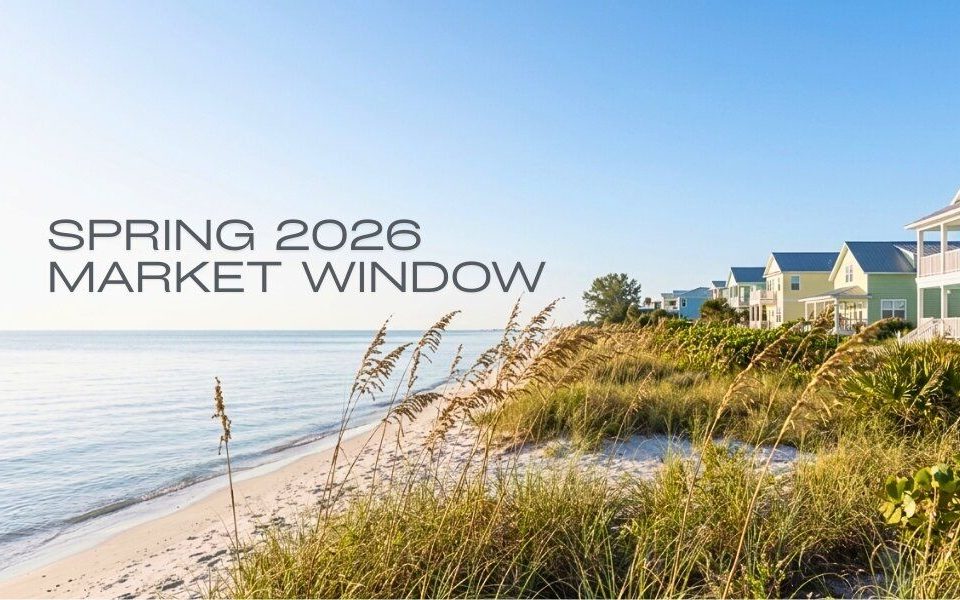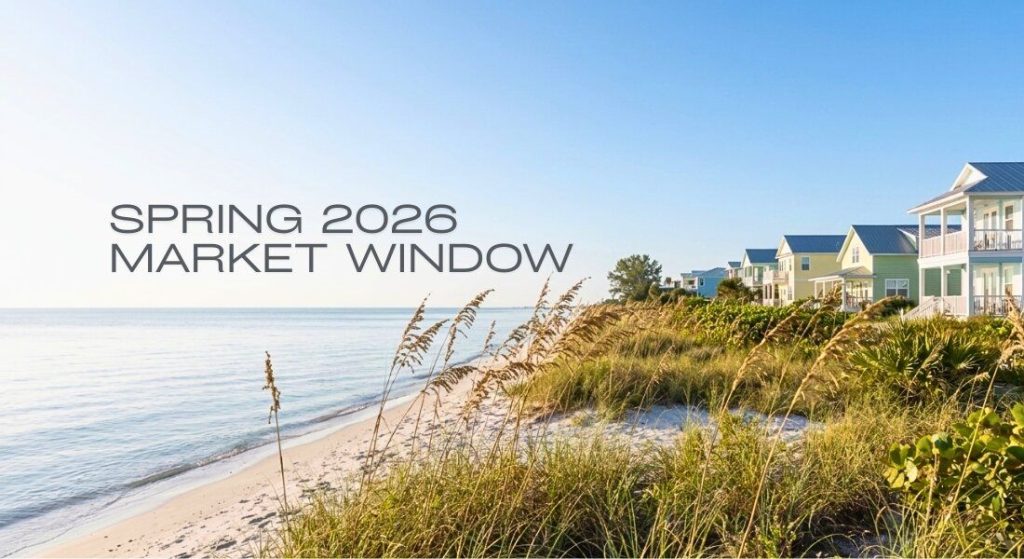
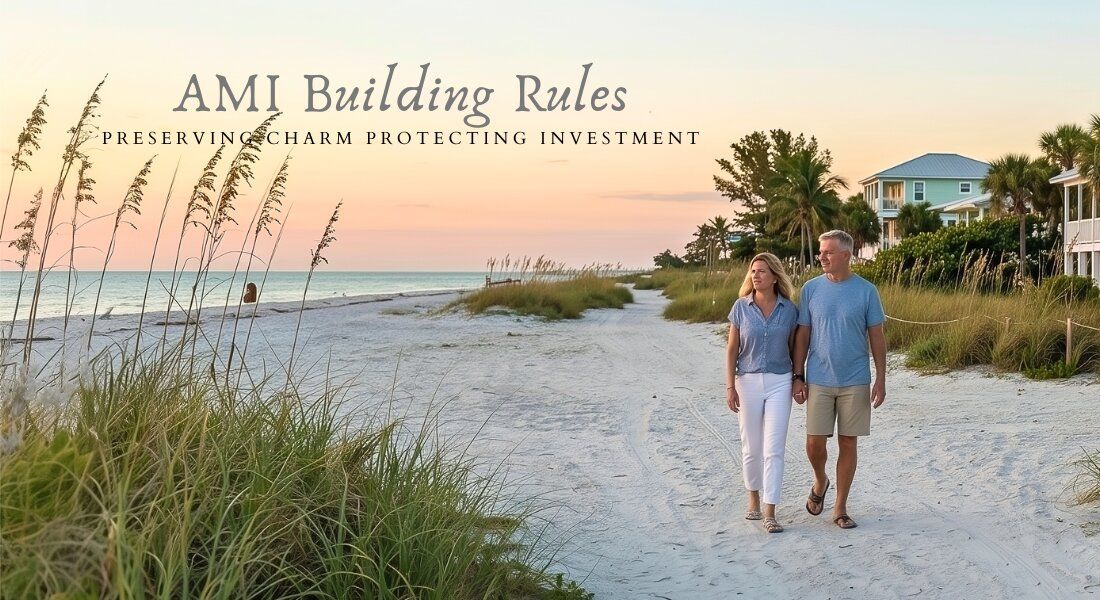
Spend even one sunset on Anna Maria Island, and you’ll notice something different. It doesn’t have the towering high-rises or overwhelming commercial sprawl you’ll find in many other vacation destinations.
Just open sky, pastel beach homes, swaying palms, and Gulf views that feel uninterrupted. That peaceful, preserved feeling isn’t luck. It’s intentional.
Anna Maria Island’s building rules quietly protect its charm and its character. They also protect the investment people make in their properties. If you’re considering buying here, understanding these regulations isn’t just helpful. It’s part of buying smart.
Anna Maria Island Real Estate Market Watch
In December 2025, the median price per square foot in Holmes Beach was $882. However, AMI real estate trends are constantly changing. Contact Billi Gartman for help buying or selling a home on Anna Maria Island.
Building Limits Protect Value
One of the reasons AMI feels exclusive is simple: the island limits housing supply by design.
Strict development rules and height restrictions prevent overbuilding. That naturally controls inventory and helps protect long-term property values.
Unlike markets that expand endlessly, Anna Maria Island stays contained, physically and strategically. For buyers, that creates a level of predictability seldom found in coastal markets.
The Three-Story Rule: Why Your View Stays Your View
One of the island’s most defining regulations is its three-story height limit.
While other Florida beach towns fill their skylines with high-rise condos, AMI made a different choice. The island protects its horizon.
For buyers, this means:
- Your sunset views are less likely to disappear behind a future tower
- Neighborhoods stay residential in scale
- The skyline remains open and breathable
That consistency matters. When you buy here, you’re buying into a preserved aesthetic, not a speculative skyline.
Three Cities, Three Personalities
Anna Maria Island includes:
- Anna Maria
- Holmes Beach
- Bradenton Beach
Each municipality has its own zoning nuances.
That affects:
- Minimum rental periods
- Lot coverage allowances
- Setback requirements
- Parking regulations
- Renovation limitations
Planning to add a pool? Thinking about a rooftop deck? Considering a rebuild?
Zoning rules determine what’s possible and what isn’t. Understanding them before closing gives you clarity instead of surprises.
Elevation, FEMA, and Coastal Construction Standards
Living on a barrier island means respecting nature. Modern construction on AMI must comply with FEMA flood elevation guidelines and hurricane-resistant building codes. That can impact:
- Foundation height
- Insurance premiums
- Renovation feasibility
- Future rebuild costs
If you’re purchasing an older property, it’s especially important to review:
- Base Flood Elevation (BFE)
- Wind mitigation reports
- Roof age and impact windows
Yes, coastal standards can increase upfront costs. But they also increase durability and peace of mind.
Island ownership is about beauty, but it’s also about preparedness.
Rental Regulations: What Investors Need to Know
Vacation rentals are a significant part of the island’s economy, but the rules are not universal.
Some neighborhoods allow weekly rentals. Others require longer minimum stays. Certain residential pockets restrict short-term rentals altogether.
If rental income is part of your strategy, you’ll need to verify:
- Minimum stay requirements
- Occupancy limits
- Local licensing requirements
- Noise and parking ordinances
These regulations aren’t random. They exist to balance tourism with residential quality of life.
For buyers, clarity here equals confidence.
Setbacks, Lot Coverage & Why Space Still Feels Open
Have you ever noticed how homes on AMI don’t feel cramped together? That’s intentional.
Island regulations control:
- How much of your lot you can build on
- Distance between structures
- Driveway dimensions
- Landscaping requirements
These rules preserve airflow, greenery, and that relaxed coastal aesthetic buyers fall in love with in the first place.
Beyond limiting overbuilding, they protect the atmosphere.
Why These Rules Actually Work in Your Favor
At first glance, building restrictions can feel limiting. But here’s the reality: they protect scarcity.
Without them, Anna Maria Island could easily mirror other overdeveloped Florida coastlines filled with towering condos and dense commercial growth.
Instead, AMI remains:
- Low density
- Architecturally consistent
- Visually open
- Intentionally scaled
For buyers, that translates to long-term desirability and value stability.
You’re not just buying a home. You’re buying into a protected lifestyle.
FAQs About Anna Maria Island Building Rules
Can I build three full stories on Anna Maria Island?
Generally, yes, but total height limits and FEMA elevation requirements still apply. Various city and lot-specific limitations may also apply.
Are short-term rentals allowed everywhere?
No. Rules vary by city and zoning district. Always verify whether STRs are allowed if rental income is part of your plan.
Do building restrictions help protect property values?
They do in many cases. Limited development and controlled growth preserve demand and neighborhood consistency.
Can I tear down and rebuild?
You can in many cases. However, setbacks, lot coverage, and elevation standards will determine what’s feasible.
Buy Smart. Build Smart. Live Smart.
AMI’s preserved atmosphere and value did not occur by accident. The community protects the island through thoughtful planning, and that planning benefits buyers who understand it.
The Anna Maria Life Team helps buyers navigate zoning laws, rental restrictions, flood requirements, and more. If you’re considering buying, building, or renovating on AMI, reach out today for a tailored consultation.