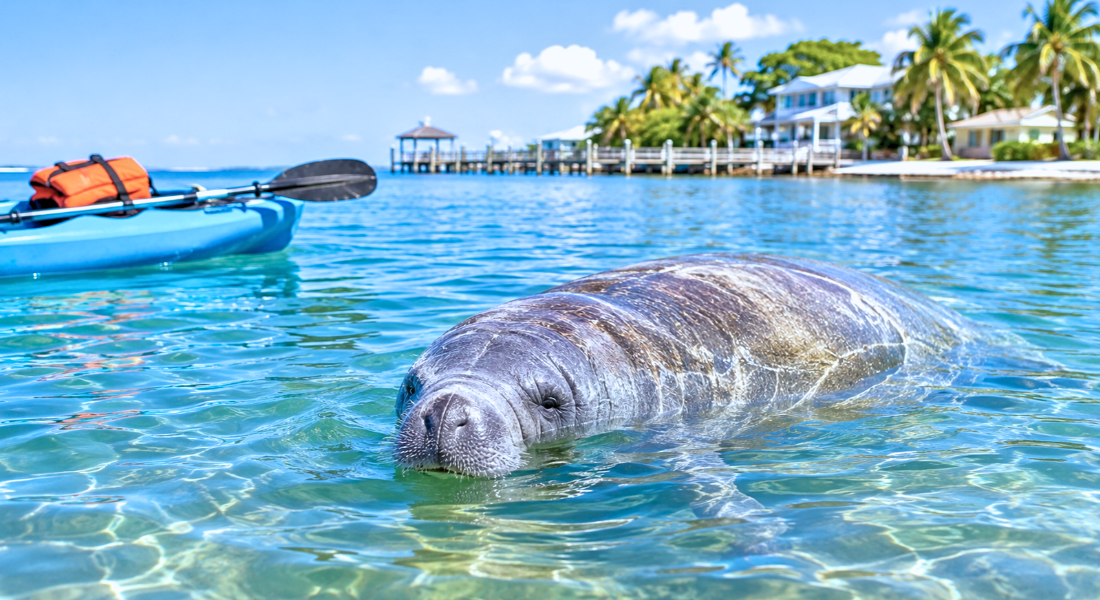
November marks Manatee Awareness Month in Florida and draws attention to the seasonal movements of these protected marine mammals. As temperatures fall, manatees begin traveling toward warmer waters and reliable winter habitats, including natural springs and power plant discharge areas.
Manatees already inhabit Florida’s waterways throughout the year, including the coastal waters around Anna Maria Island. Their seasonal movements make November an important time to understand where they travel, why they gather in certain locations, and how to observe them responsibly.
Anna Maria Island Market Snapshot
Anna Maria Island continues to attract buyers interested in its coastal setting and residential communities. The island recorded 226 home sales over the 12 months as of November 2026, at a median sold price of $1.8 million. Homes spent a median of 82 days on the market, with 58 active listings.
These figures offer useful context for buyers, though property values vary by location, condition, and waterfront access. The island’s natural surroundings add to its appeal, but manatee migration does not directly determine property values or investment returns.
Seasonal Movement and the Search for Warm Water
Florida manatees inhabit rivers, bays, canals, estuaries, and coastal areas. During warmer months, they move throughout these waterways in search of food and suitable habitat. Their diet consists primarily of submerged, floating, and emergent aquatic vegetation.
As water temperatures fall in autumn and winter, manatees begin moving toward warmer locations. They cannot tolerate prolonged exposure to water below approximately 68 degrees Fahrenheit. Extended exposure to cold water can cause cold stress and interfere with digestion, making access to reliable warm-water habitats essential for survival.
November marks the beginning of increased seasonal movement, although timing varies with weather and water conditions. Manatees do not suddenly arrive in Anna Maria Island’s waterways each November. They already inhabit Florida’s coastal waters and may travel through the area as temperatures change.
Gulf Coast Destinations for Winter Manatee Viewing
Several established warm-water sites across Florida’s Gulf Coast attract manatees during winter. The TECO Manatee Viewing Center in Apollo Beach is a popular regional destination for observing manatees. They gather in the warm-water discharge canal near Tampa Electric’s Big Bend Power Station.
The center features observation areas, boardwalks, and educational exhibits about manatees and their habitat. Its discharge canal serves as a protected warm-water refuge during colder months. The viewing center typically operates from November 1 through April 15. Visitors can check current hours and seasonal information.
Another Gulf Coast location is Spring Bayou in Tarpon Springs. Manatees visit this natural spring area during cooler months, generally from November through May. Its consistently warm water provides another seasonal refuge along Florida’s Gulf Coast.
Farther north, Crystal River and Kings Bay are among Florida’s best-known winter manatee habitats. Natural springs in the area attract seasonal gatherings, and designated viewing areas allow visitors to observe manatees while following wildlife protection guidelines.
These locations offer more dependable winter viewing opportunities than the waterways around Anna Maria Island, where sightings depend on the animals’ movements and local conditions.
Manatees in Anna Maria Island’s Coastal Waters
Manatees use a variety of Florida waterways, including bays, estuaries, canals, and coastal channels. The waters around Anna Maria Island form part of this broader habitat, so residents and visitors may encounter them throughout the year.
Sightings can occur from shore, docks, boats, and kayaks, although they are never guaranteed. Manatees often remain mostly submerged, making them difficult to spot. Observers may see a snout, back, tail, or flipper briefly break the surface. Circular patterns on the water, sometimes called footprints, can also indicate movement just below the surface.
Kayaking and paddleboarding offer opportunities to experience the island’s coastal waterways at a slower pace. Visitors may encounter manatees while exploring, but should never approach or pursue them to improve their chances of a sighting.
The Florida Fish and Wildlife Conservation Commission’s viewing guide lists designated manatee viewing sites across Florida.
Responsible Wildlife Viewing and Boating Awareness
Manatees are protected marine mammals, and observing them responsibly is essential to their safety. Whether watching from a kayak, boat, dock, or shoreline, visitors should maintain a respectful distance and allow the animals to move freely.
Never chase, touch, feed, surround, or attempt to ride a manatee. These actions can disturb the animals and interfere with their natural behavior. At established warm-water refuges, disturbing manatees can cause them to leave protected areas and enter colder water, potentially putting their health at risk.
Boaters also play an important role in preventing injuries. Boat strikes are a major threat to Florida manatees, particularly because the animals can be difficult to see below the surface.
A few precautions can help reduce that risk:
- Observe posted manatee protection zones and follow all speed restrictions.
- Travel slowly in shallow or unfamiliar waterways.
- Watch for manatee snouts, backs, tails, and circular surface patterns.
- Wear polarized sunglasses to improve visibility through the water.
- Keep a lookout for manatees before changing direction or operating near shorelines.
The Florida Fish and Wildlife Conservation Commission provides manatee protection zone maps and boating guidance. Checking local restrictions before heading out helps boaters protect wildlife while navigating Florida’s waterways.
Protecting Manatees and Their Winter Habitats
Protecting manatees also means preserving the habitats they depend on throughout the year. Seagrass beds and other aquatic vegetation provide essential food, while natural springs and reliable warm-water sites offer refuge during colder months.
Pollution, habitat degradation, and changes to freshwater and coastal ecosystems can affect these resources. Maintaining healthy waterways therefore supports manatees and many other marine species.
Residents and visitors can contribute through everyday choices. Following boating regulations, avoiding wildlife disturbance, keeping waterways clean, and supporting local conservation programs all help protect manatee habitat. Limiting fertilizer and pesticide runoff also helps preserve water quality and the aquatic vegetation manatees depend on.
Anyone who encounters an injured, sick, distressed, or dead manatee should report it to the Florida Fish and Wildlife Conservation Commission’s Wildlife Alert Hotline at 888-404-FWCC (3922). Do not attempt to handle or move the animal. Trained responders can assess the situation and provide appropriate assistance.
Common Questions About Florida’s Manatee Season
When does manatee migration begin in Florida?
Manatees begin seasonal movements toward warmer waters as temperatures fall in autumn. November is recognized as Manatee Awareness Month and marks an important period for increased awareness of their movements. Migration timing varies with local weather and water temperatures.
Do manatees live around Anna Maria Island year-round?
Manatees can be found in Florida’s coastal waterways throughout the year, including the waters around Anna Maria Island. Their locations and movements change with water temperatures, food availability, and seasonal conditions.
Where can visitors see manatees near Anna Maria Island during winter?
The TECO Manatee Viewing Center in Apollo Beach and Spring Bayou in Tarpon Springs are regional winter viewing locations. Farther north, Crystal River and Kings Bay also attract seasonal manatee gatherings. Sightings around Anna Maria Island are possible but not guaranteed.
What should boaters do when they encounter a manatee?
Boaters should slow down, maintain a safe distance, and follow posted manatee protection zones. Watching for surface disturbances and wearing polarized sunglasses can improve visibility. Never chase, approach, touch, or feed a manatee.
What should someone do if they see an injured manatee?
Report injured, sick, distressed, or dead manatees to the FWC Wildlife Alert Hotline at 888-404-FWCC (3922). Avoid approaching or handling the animal so trained responders can assess the situation safely.
Discover the Natural Side of Anna Maria Island
Manatee migration is an important part of Florida’s seasonal wildlife cycle. These animals travel to warmer waters as temperatures drop. Understanding their movements and protecting the habitats they depend on helps residents and visitors appreciate Anna Maria Island’s natural environment.
For those considering a move, purchasing a property, or exploring the island’s coastal communities, local knowledge extends beyond real estate. Contact Billi Gartman to learn more about Anna Maria Island and the lifestyle its coastal surroundings make possible.